
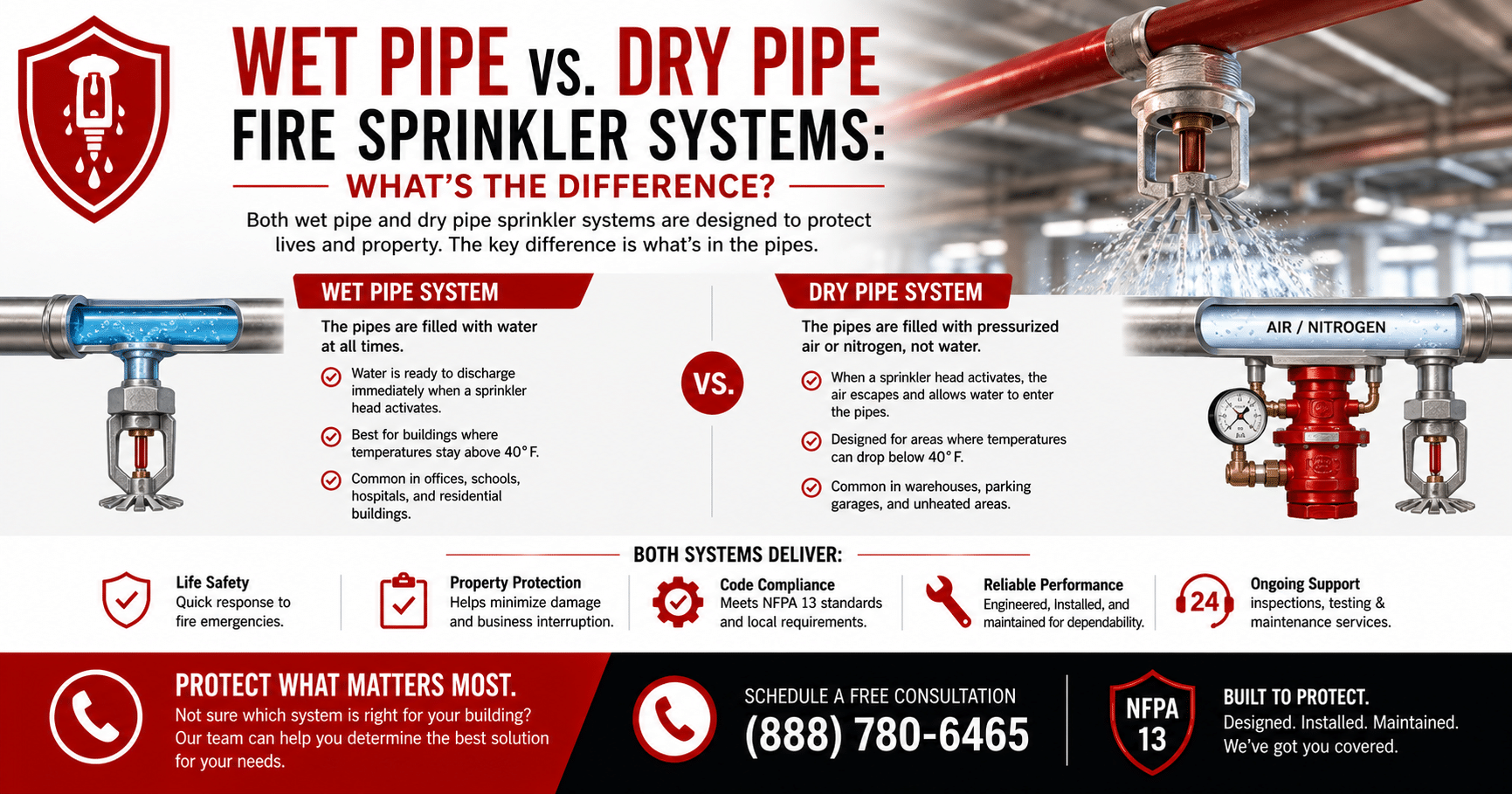
Not every commercial fire sprinkler system works the same way. The two most common types — wet pipe and dry pipe — are built for very different environments, and choosing the wrong one for your facility can mean the difference between a system that protects your building and one that fails when you need it most (or floods it when you don’t).
Wet Pipe Systems
A wet pipe system is the simplest and most common type of fire sprinkler system. Water is held in the pipes at all times, so when a sprinkler head activates, water discharges immediately. There’s no delay, which makes wet pipe systems the fastest-responding option available.
Best for: Heated buildings where pipes won’t freeze — offices, retail spaces, hotels, and most standard commercial buildings.
Dry Pipe Systems
A dry pipe system holds pressurized air (not water) in the pipes. When a sprinkler head activates, the air releases first, which triggers a valve that allows water to flow in behind it. This adds a short delay (typically under a minute) but prevents water from sitting in pipes that could freeze.
Best for: Unheated warehouses, parking garages, loading docks, and any structure where temperatures can drop below freezing.
The Trade-Off
Wet pipe systems are simpler, cheaper to install and maintain, and respond faster. Dry pipe systems cost more, require more testing (the air pressure and trip mechanism both need regular verification), and have a brief response delay — but they’re the only safe option in spaces where freezing is a real risk.
Which One Does Your Facility Need?
The right choice comes down to climate control, building use, and local fire code. A heated office in Phoenix has very different needs than an unheated distribution warehouse in Denver — and getting this decision wrong at the design stage is expensive to fix later.
How Control Systems Inc. Helps
Our team tests, designs, installs, and maintains both wet and dry pipe systems across all of our service markets, and we’ll walk you through exactly which system (or combination of systems) makes sense for your specific facility before anything gets installed.